
Rare butterflies and other vulnerable species are bouncing back in the Cotswolds, thanks to a major Gloucestershire Wildlife Trust (GWT) habitat restoration project to connect three nature reserves.
At Siccaridge Wood nature reserve, bordering the Sapperton Valley, GWT’s Wilder Landscapes team has reached the halfway point of a two-year project to create and enhance native broad leaf woodland, allowing species like large blue butterflies to thrive.
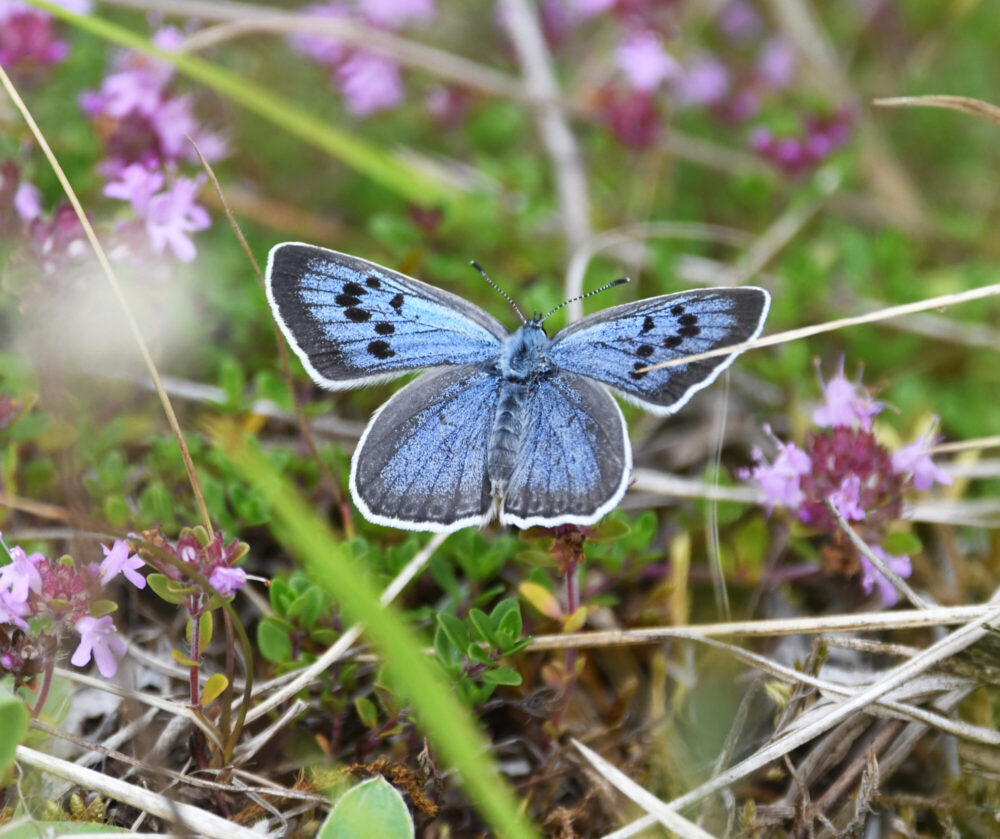
The work, delivered in partnership with Grundon, links Daneway Banks, Siccaridge Wood and Trillis Banks nature reserves. The success of the project was due to £48,000 of funding from Grundon through the Landfill Communities Fund, which has enabled GWT to improve connectivity for species like the rare large blue butterfly, which was reintroduced to Daneway Banks in the 1980s.
GWT’s team has created long clearings through the woodland called woodland rides, using traditional woodland management methods such as coppicing, which involves cutting trees in a way that encourages new shoots to grow, creating habitat piles with logs and other materials along the way.
Woodland wildflowers such as dog-violet are flourishing in the increased light, supporting the threatened pearl-bordered fritillary, a species so closely tied to traditional woodland management it’s known as “the woodman’s friend.”
Tom Uridge, Wilder Landscapes Advisor says:
“Within a woodland setting there is a saying, ‘where there is light, there is life’. Woodlands, although beneficial habitats in themselves, can become deeply shaded over time, and this deep shade means there are fewer plants like wildflowers beneath the canopy itself.”
“Through this work and continuity by our Land Management team, we hope to future proof the success of not only pearl-bordered fritillaries, but lots of other species that call Siccaridge Wood home, such as dormice, lily of the valley, wood ant, and many more.”

Kirsti Santer, Head of Marketing & Communications at Grundon, says:
“We’re so pleased to have been able to support this important project, which will help reconnect vital habitats and create stronger, more resilient landscapes for wildlife. Species such as the Large Blue Butterfly depend on well-connected habitats to thrive and adapt. By investing in initiatives like this, we can help ensure that some of our rarest species are able to move, recover and flourish for generations to come.”