
A major clearance project to help stop the River Colne at Denham becoming clogged up with an invasive plant species has been completed this winter.
Floating pennywort, originally introduced to this country for ornamental ponds, is now banned from sale in the UK, but it has already run rampant in many canals and rivers.
Capable of growing as much as 20cm a day, it smothers habitats and crowds out native plants, as well as damaging ecosystems and reducing oxygen levels for fish and other wildlife.
Now, with £3,000 funding from Grundon, a professional contractor has been brought in with specialist equipment to help tackle the problem on a 5,000m2 stretch of the river north of Denham.
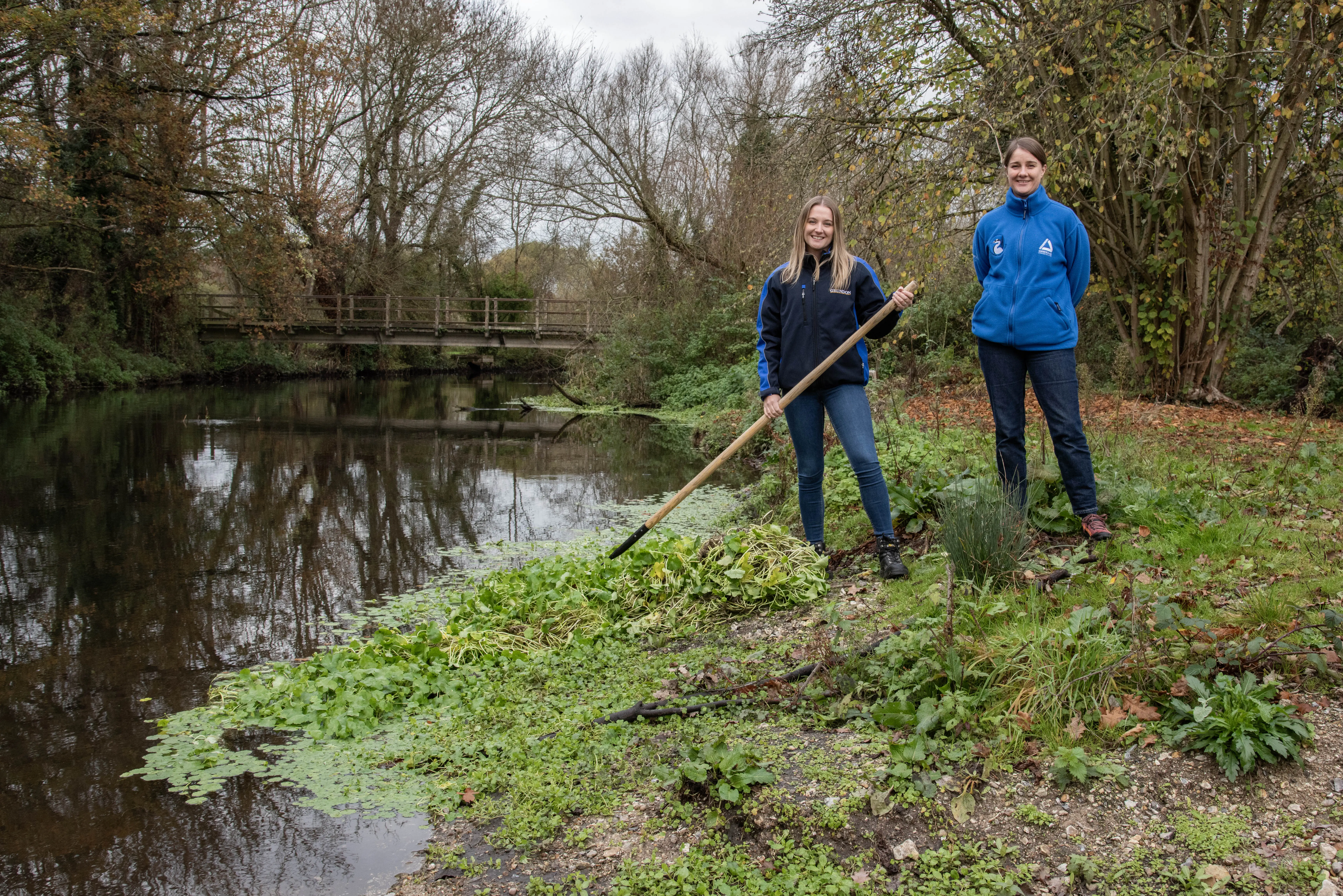
Matt Mountain, Senior Project Manager – Rivers, at community and environmental charity Groundwork South, , explains: “In just one year, pennywort can change a beautiful clear white bottomed chalk stream, such as we have here with the River Colne, into a dark silty desert.
“It creates a raft of incredibly dense, thick plants which can join up right across the river leaving the water underneath in complete darkness. This kills off food and habitat for fish and other wildlife and can make it dangerous for people using the waterway for leisure activities, such as fishing, rowing or canoeing. It can even go as far as causing flooding by impeding water flow.
“Grundon’s funding has helped to make a real difference.”
Matt Mountain
Senior Project Manager – Rivers, Groundwork South
While Groundwork South teams and volunteers can remove smaller amounts of pennywort by hand, the River Colne at Denham is too deep and fast flowing to allow individuals to enter the water, hence needing to bring in specialist equipment.
Kirsti Santer, Grundon’s Head of Marketing & Communications, visited to see for herself how the clearance programme is making a difference.

“The River Colne is such a beautiful area to walk and incredibly popular with local residents who want to enjoy the countryside,” she said. “The river had become so choked up with pennywort that now, after the clearance work, to see the water running both clear and free once again, is absolutely fantastic. We were very pleased to have funded the project and well done to everyone for their hard work.”
As an invasive, non-native species (INNS), pennywort has no natural predators in this country. With the aim of finding a long-term sustainable solution for the UK’s canals and rivers, Groundwork South is working with scientists at CABI UK*, undertaking trials using a carefully selected weevil species which only eats floating pennywort. After careful testing for safety, the South American beetles have been released into controlled areas and are being carefully monitored as they eat the plants.
Matt adds: “We are very proud to be working with CABI on this pilot project and fully optimistic this is part of the solution to the pennywort problem.”
The Grundon donation was provided via the Landfill Communities Fund (LCF).
*CABI is an international, intergovernmental, not-for-profit organisation that improves people’s lives worldwide by providing information and applying scientific expertise to solve
problems in agriculture and the environment.