
Since 2012, Grundon has partnered with Royal Berkshire Hospital to manage its dry waste, clinical and hazardous waste streams.
Over more than a decade, the relationship has evolved from reliable service delivery into a strategic, data-driven partnership focused on efficiency, compliance, carbon reduction and continuous improvement.
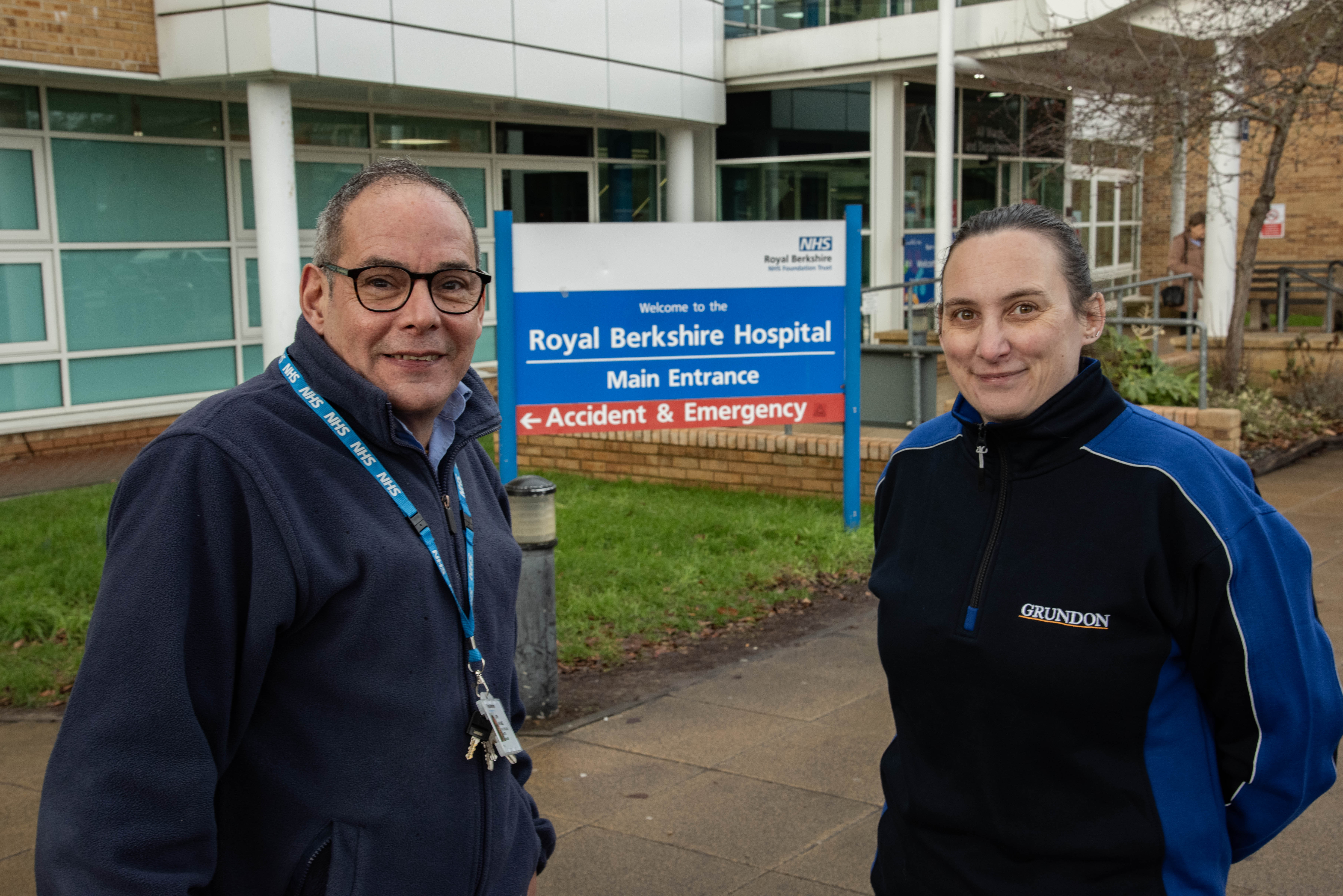
Royal Berkshire NHS Foundation Trust is one of the largest general hospital foundation trusts in the UK, providing acute medical and surgical services to Reading, Wokingham and West Berkshire, alongside specialist care for patients across the wider region. Operating in a 24/7 clinical environment, the Trust faces significant challenges in balancing operational efficiency, legislative compliance, and sustainability goals.
Transforming dry waste infrastructure
Dry waste has been a major focus of recent improvements, led by Chloe Mason, Client Engagement & Strategy Manager at Grundon, in partnership with the Trust’s estates and facilities teams. The Trust’s Waste Services team played a central role in shaping, coordinating, and implementing changes on site, ensuring that new systems and infrastructure aligned with operational realities.
To increase recycling rates and streamline operations, Chloe proposed a change in on-site infrastructure, including introducing a Dry Mixed Recycling (DMR) compactor and cardboard baler, installed in the hospital’s new dry waste yard.
These upgrades were delivered through strong communication and day‑to‑day collaboration between Grundon and the Trust’s Waste Services team, who helped redesign workflows and train staff on the new equipment.
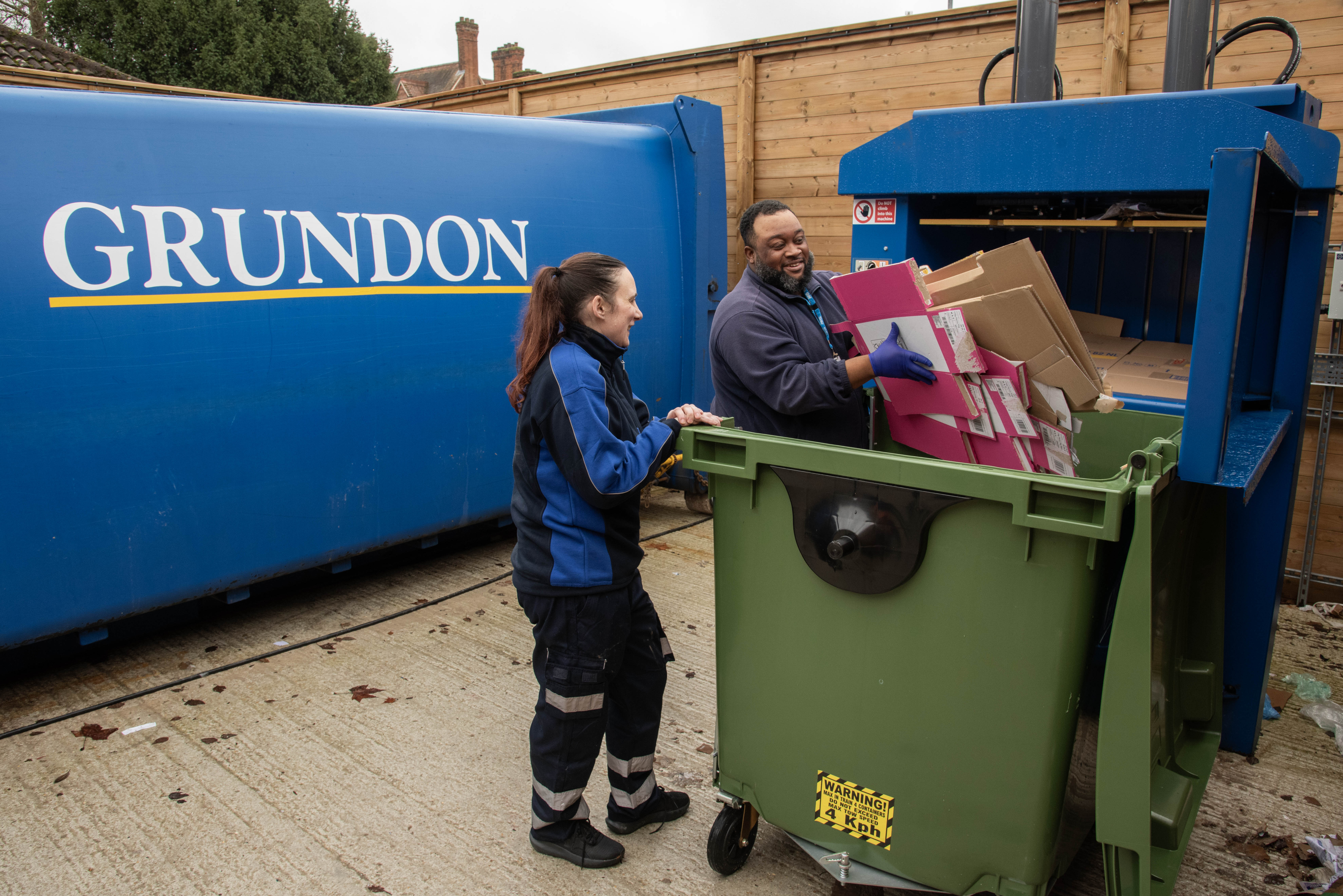
Since August 2025, when the DMR compactor was installed, the Trust has seen reduced collections from five times per week to two. In addition to reduced vehicle movement, they have also seen savings around £2,000 per month. By November 2025, the cardboard baler was operational, allowing DMR compactor collections to drop further – now collected just once per week.
“This goes to show what’s possible when the right infrastructure, is invested in. By investing in the right equipment on site, Royal Berkshire Hospital has reduced costs, cut vehicle movements, and created a more efficient waste collection system for its mixed recycling - all without disrupting day-to-day operations.”
Chloe Mason
Client Engagement & Strategy Manager
Alongside external infrastructure, colour‑coded bins have been deployed across the hospital to improve internal segregation of general waste and dry mixed recycling by both hospital staff and the general public. In addition, most desk‑side bins have also been removed by the Trust’s Waste Services team to encourage the correct use of centralised recycling stations and improve overall waste‑segregation compliance.
Glass recycling has also been rolled out to comply with the Simpler Recycling legislation that came into force in March 2025.
Following the new legislation, the hospital’s food waste volumes have nearly doubled, rising from 2.36 tonnes in April 2025 to 4.45 tonnes in January 2026, reflecting improved segregation. Food waste is sent to anaerobic digestion, where it is converted into energy and bio-fertiliser for UK farmers.
Engagement and education
Improved recycling rates is also reinforced by staff engagement. Grundon frequently attends site to host waste awareness day events. A standout event was the National Healthcare Estates & Facilities Day in June 2025, celebrating the often unseen professionals who keep hospitals running 24/7. Grundon supported the event with a pop-up stand using eye-catching banners explaining waste journeys as well as an interactive game of “bin pong” with prizes up for grabs. These events provide practical guidance, the opportunity to answer staff questions, and strengthen recycling behaviour across the hospital.
Waste Composition Analysis (WCA)
To further improve recycling, a Waste Composition Analysis was carried out in January 2026, to review the general waste stream from the North Block and ICU to identify materials that could be segregated and moved up the waste hierarchy.

A 69.4 kg sample of general waste was sorted over the course of a day. The analysis identified a significant proportion of materials with recycling potential. Notably, tissues accounted for 28% of the total sample. Through its RecyclePlus service, Grundon offers a Tork paper towel recycling; as a result, it was recommended that the hospital assess the financial viability of switching to Tork paper towels, presenting a high-impact opportunity to support increasing the hospitals overall recycling rates.
Food waste represented a further 11% of the sampled material, primarily consisting of teabags and unopened packaged food. In response to these findings, additional engagement activities are being explored to improve awareness among the public and catering staff about correct disposal routes. The placement and availability of internal food waste caddies are also under review.
Over the past 12 months, Royal Berkshire Hospital has invested heavily in recycling infrastructure, achieving a 9% increase in its recycling rate and reaching 40% in January 2026 – a notable achievement in a hospital environment.
The next phase will focus on refining infrastructure further, improving signage, and strengthening engagement initiatives to make correct waste disposal effortless for staff, patients, and visitors alike.
Clinical waste
Clinical waste services are led by Becky Lillywhite, Contract Manager – Clinical at Grundon, with daily collections taking place.
All orange bag clinical waste is disposed of at Grundon’s Energy-from-Waste facility, generating low-carbon energy, and ensuring complete destruction of the material.
Becky said “In a healthcare setting, safety and compliance are fundamental. At Royal Berkshire Hospital, improved segregation is delivering clear environmental benefits while supporting safer, more efficient clinical waste management.”
20:20:60
The Trust is progressing towards the NHS England 20:20:60 target, which aims to reduce carbon impact and reliance on high temperature incineration.
Following an extensive pre-acceptance audit in July 2025, carried out by Shauna Costley, Clinical Compliance & Sustainability Manager at Grundon, segregation performance improved significantly:

Shauna audited over 60 wards, exceeding the standard requirement of auditing only a third of the hospital. Audits are conducted annually to maintain continuous improvement.
Sharing knowledge and expertise
In October 2025, Melanie Walker, Associate Director of Facilities Management at Royal Berkshire Hospital attended Grundon’s Sustainability & Innovation Day, touring its Energy from Waste plant and Materials Recovery Facility, and learning about emerging recycling innovations.
Reflecting on the day, Melanie said,
“Grundon’s Sustainability & Innovation Day was incredibly valuable. Seeing first-hand how our waste is managed and learning about new innovations gave me real confidence in the partnership and plenty of ideas for what we can achieve next together.”
Melanie Walker
Associate Director of Facilities Management
Looking into the future, both organisations will continue to focus on innovation, staff engagement, and data-driven solutions to improve waste management at one of the region’s busiest hospitals. A current innovation being explored is the recycling of healthcare plastics, specifically dialysis bottles, curtains and theatre wraps.
Grundon also manages the hospital’s confidential waste and ad-hoc collections of Persistent Organic Pollutants (POPs), with the Waste Services team playing a crucial role in ensuring compliance on-site across all waste streams.